



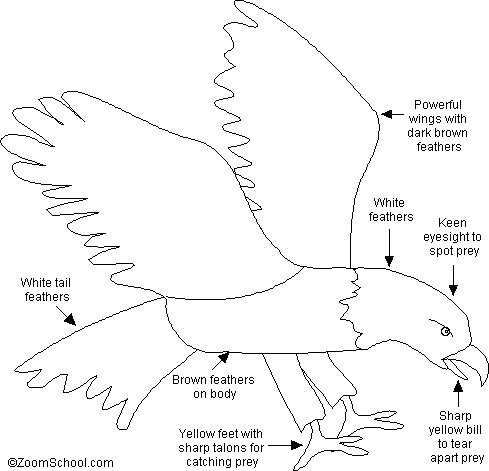
The bald eagle, Haliaeetus leucocephalus, is a magnificent bird of prey that is native to North America. This majestic eagle is not really bald; white feathers cover its head. The derivation of the name “bald” is from an obsolete English word meaning white. The bald eagle has been the national symbol of the USA since 1782.
Habitat: The bald eagle lives near rivers and large lakes, as it catches most of its food in the water.
Diet: Eagles are carnivores (meat-eaters) and hunt during the day (they are diurnal). They eat mostly fish. They also hunt and scavenge small mammals, snakes, and other birds.
Anatomy: Bald eagles have a long, downward-curving yellow bill, and large, keen eyes. These strong fliers have white feathers on their head, tail, and wing tips; the body has brown feathers. The feet have knife-like talons. Eagles have about 7,000 feathers. Adult eagles have a 7 ft (2.3 m) wingspan. The females are 30% larger than the males.
Nest and Eggs: Bald eagles build an enormous nest from twigs and leaves. The nest, called an aerie, can be up to eight feet across and may weigh a ton! Nests are located high from the ground, either in large trees or on cliffs. Eagles may use the same enormous nest over and over again for years.
A clutch of 1 to 3 eggs is laid by the female. The incubation period is from 1 to 1 1/2 months. Both males and females incubate the eggs. They both feed the hatchlings until they learn to fly (fledge).