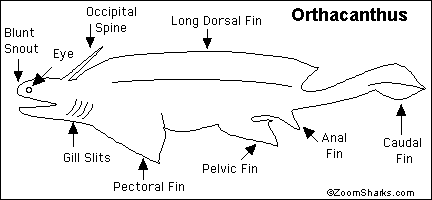
Orthacanthus was an ancient, fresh-water shark that had a long spine growing from the back of its skull. It had a very long dorsal fin, which ran all along the sharks back, giving it an eel-like appearance.
Teeth: Orthacanthus' teeth were V-shaped. Like most sharks, Orthacanthus' teeth were probably located in rows which rotated into use as they were needed. Most sharks have about 5 rows of teeth at any time. The front set is the largest and does most of the work. The first two rows are used for obtaining prey, the other rows rotate into place as they are needed. As teeth are lost, broken, or worn down, they are replaced by new teeth. They did not chew their food like we do, but gulped it down whole in very large chunks.
When Orthacanthus Lived: Orthacanthus lived from roughly 280 million years ago, from the Pennsylvanian period through the Permian period. They were around before the dinosaurs evolved.
Diet: Orthacanthus was a carnivore (meat-eater). Its diet probably included animals like Eryops, crustaceans, and fish.
Classification: Kingdom Animalia, Phylum Chordata, Class Chondrichthyes, Order Xenacanthiformes, Genus Orthacanthus.