
|
| You might also like: | Lagomorphs | Rabbit Quiz Printout | Jack Rabbit Printout | Peregrine Falcon Printout | Rabbits | Today's featured page: 'Draw Colorful Circles' Book |
| EnchantedLearning.com More Mammal Printouts |
EnchantedLearning.com Hares |
Animal Printouts Label Me! Printouts |
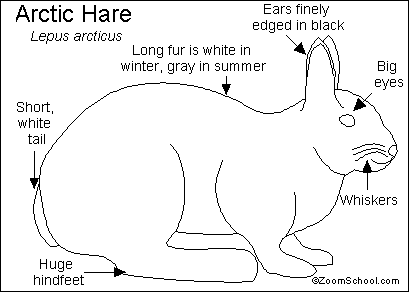
The female hare is called a doe, the male is called a buck, and the baby hare is called a leveret. Most hares live for about a year in the wild; they live for up to 7 years in captivity.
Distribution and Range: Hares are found worldwide except Antarctica and some ocean islands. They live in almost every climate, including forests, grasslands, deserts, tundra, and mountainous areas.
Predators: This mammal is hunted by many animals, including wolves, dogs, coyotes, foxes, lynxes, eagles, owls, hawks, and people. Hares rely on their acute senses to avoid predators, but when confronted, they will freeze (to avoid detection) or hop into the air (to escape).
Anatomy: Hares vary from 14 to 28 inches (36-71 cm) long; the tail is 2 to 4 inches (5-10 cm) long. They weigh from 3 to 12 pounds (1-5.5 kg). They have very big, powerful hind legs and big hind feet. The fur of the hare camouflages it; it's color often changes as the seasons change. Fur colors include brown, tan, reddish, gray and white. Hares are not rodents, but like rodents, their two front teeth continue to grow throught their life.
Diet: Hares are herbivores (plant-eaters). They eat leaves, grasses, bark, and herbs.
Classification: Kingdom Animalia (animals), Phylum Chordata (having a notochord), Class Mammalia (mammals), Order Lagomorpha (rabbits, hares, and pikas), Family Leporidae (rabbits and hares), Genus Lepus (hares and Jack Rabbits). There are more than 20 different species of hares. Some hares include the common hare, the jack rabbit, the Arctic hare, the snowshoe hare, the European hare, and the blue hare. Some hares are solitary, while others live in groups. Some hares live in shallow dens (called forms) - hares rarely burrow deeply. Hares dig their forms using their front feet.
| Search the Enchanted Learning website for: |