
|
| You might also like: | Draw Four Fish | Queen Conch Printout | Gastropod Printouts | Snail Printout (unlabeled) | Oyster Printout | Today's featured page: Aardvark Coloring Page |
| Mollusk Printouts | EnchantedLearning.com Knobbed Whelk |
Animal Printouts Label Me! Printouts |
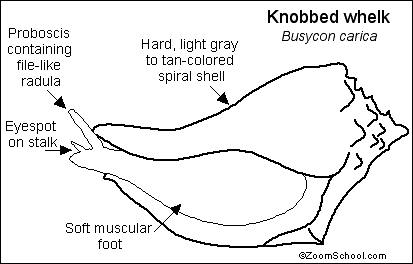 The Knobbed Whelk (Busycon carica) is a gastropod, a soft-bodied invertebrate (animal without a backbone) that is protected by a very hard shell. This mollusk is found in shallow waters of the Atlantic Ocean off the east coast of North America from Massachusetts to northern Florida.
The shell: The Knobbed Whelk has a spiral shell with knobs (or spines) along its shoulder. The whelk's mantle, a thin layer of tissue located between the body and the shell, creates the shell. The whelk builds the hard shell from calcium carbonate that it extracts from the seas. The shell is up to 9.5 inches (24 cm) long. The shell is light gray to tan, and often has brown and white streaks.
Anatomy: The soft body is divided into the head, the visceral mass, and the foot (which is small). The Knobbed Whelk has two pairs of tentacles on the head; it has a light-sensitive eyespot located on each of the larger tentacles. The smaller pair of tentacles is used for the sense of smell and the sense of touch.
Diet: Knobbed Whelks eat clams. They open the clam with their hard shell, and insert their long proboscis. They eat using a radula, a rough tongue-like organ that has thousands of tiny denticles (tooth-like protrusions).
| Search the Enchanted Learning website for: |